
Paperback writer
Nostalgia is rife in gaming right now. Remakes and remasters are flooding the market, with games released less than 10 years ago getting the re-release treatment. Astro Bot is a game powered by nostalgia for the PlayStation platform. And the indie space is filled to the brim with titles inspired by games of years gone by. The Plucky Squire, the first release from British studio, All Possible Futures, taps into the nostalgia well itself. But in a far more interesting manner than most other titles I’ve played in recent years.
The Plucky Squire tells the story of Jot, a colourful hero, who’s been tasked with defeating the evil Humgrump in his attempts to take over the Land of Mojo. Fairly standard stuff. When confronting our antagonist, however, we learn that Humgrump has gained access to the book this story takes place in, and has read ahead. Tired of being defeated time and time again, Humgrump has gained the ability travel between the book world and the real world, and will use everything available to him to change the course of the narrative. He then pushes Jot out of the book, into the real world, and it’s up to you to jump between both realms to save the day.
It’s all very meta.
A Bestseller
What strikes you immediately is just how warm The Plucky Squire is. Each page of this story is beautifully illustrated, packed with character and personality, even if you’re just walking from one door to another. Even the real world moments look and feel delightful. There’s a discerning realism to everything outside of the book that just goes to show how talented the artists involved truly are. Beetles are beetles. Grapes and grapes. Carrots are carrots. It’s a gorgeous game, honestly.
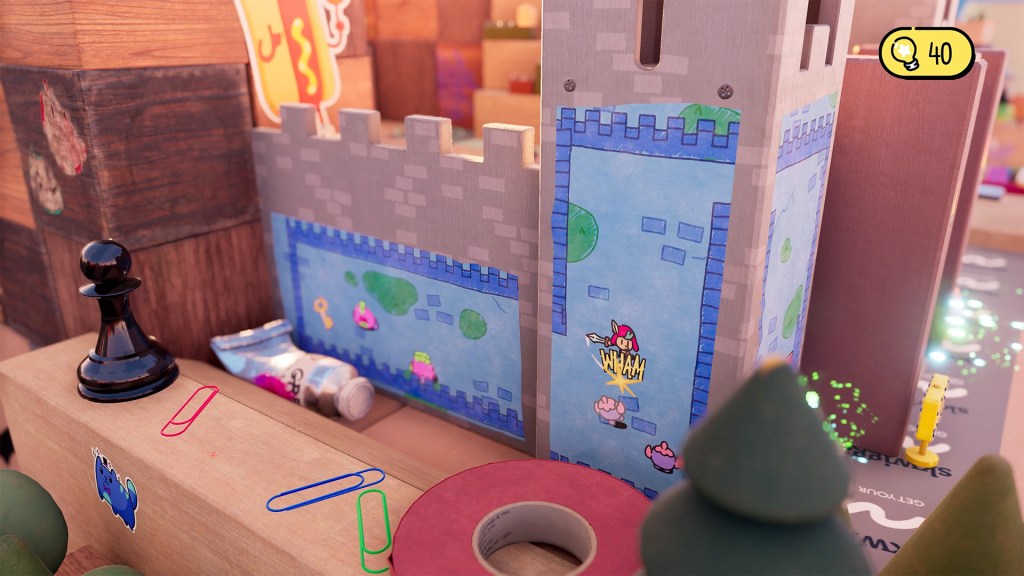
Part of the joy is seeing how the real world can interact with the book world. The entire game, in reality, takes place on a desk in a child’s bedroom. When you leave the book, the environment you explore is what you’d find on the desk in a child’s bedroom. Errant pieces of lego, random blocks, doodles, post-its, lunch boxes, toys, it’s just a desk. And that’s where the game’s brand of nostalgia starts to kick in.
I look at Jot helping a mascot on the side of a mug, or a caveman in a cartoon strip, and am transported to my own childhood. A plush Pikachu teaming up with a Beanie Baby in a football kit to storm a toy castle? That’s a Wednesday morning during the school holidays. I play The Plucky Squire and I see a story being told from the perspective of a child. One of the core mechanics of the game is to take words from some pages so you can change sentences on others. There’s something very child-like about just going “No, it was not a broken bridge. It was a sturdy bridge”.
So many of the games puzzle mechanics feel like they were devised using child logic, in the cleverest way. A rabbit blocks your path and won’t move, how will you get past? Got get a carrot from outside and bring it to them. A movable block is in the way and there’s no obvious way around it? Close the book so that it drops from one page to another. It’s so silly it’s genius.
The problem with play
Which is why it’s so disappointing that The Plucky Squire just doesn’t fully land. While it’s lovely to look at, and listen to, and feel good about, The Plucky Squire isn’t as fun to actually play. While The Plucky Squire is a sight to be seen, under the surface you’ve a fairly standard action platformer.
None of it’s bad, don’t get me wrong. The swordplay is fine, the platforming is fine, it’s all fine. But the moment to moment gameplay doesn’t feel particularly engaging. It’s just a lot of swinging your sword, and sometimes throwing it, with no real need for strategy. There is a weapon upgrading system, too, though I’ll say that never felt essential. Enemies I faced in the early on didn’t seem to take fewer hits to defeat later in the story.
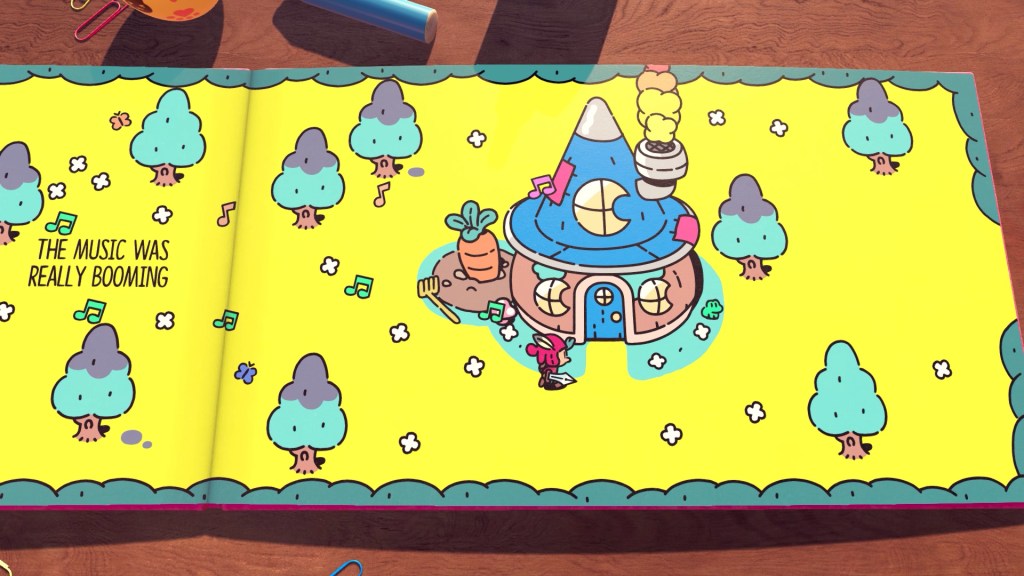
The aforementioned puzzles, while certainly novel, do grow somewhat tedious the further through the game you get. Jumping between the book and real worlds is pretty cool at first, but there just isn’t enough to keep those moments feeling fresh over the games 10ish hours.
And then there’s progression through the game itself. The Plucky Squire, unsurprising given it plays out within a story book, pays chapter to chapter. I think, given it reminded me most of a top-down Zelda, I was expecting something a little more open. The Plucky Squire is incredibly linear, with only a collection of concept art to drive you off the path the game wants you to travel.
Conclusion
There’s a lot to like about The Plucky Squire, and you’ll certainly feel compelled to give it the benefit of the doubt because it’s so charming. At no point did I regret giving it my time. I just wish there was the substance to match its undeniable style. For a debut, however, it gets enough of a recommendation from me.
 Yet Another Gaming Blog
Leave a comment